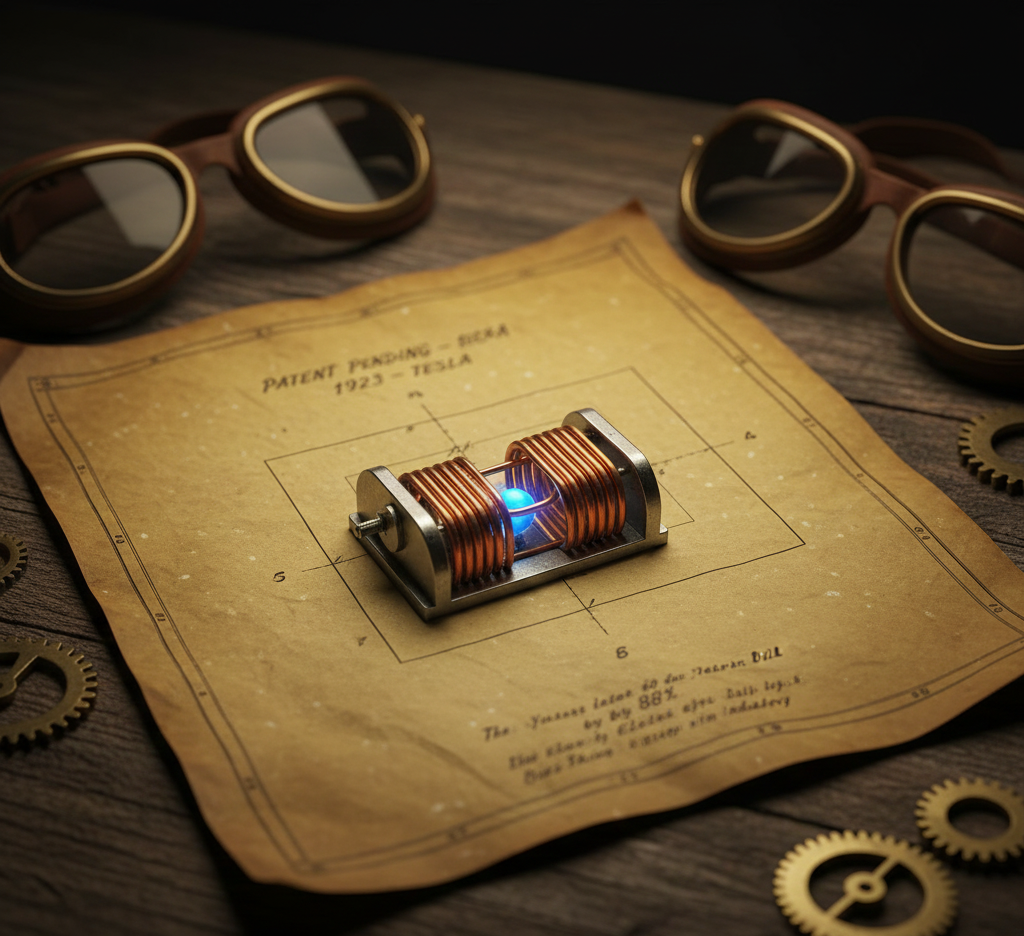
For decades, experts told us that “going off the grid” costs a fortune. They said you needed expensive solar panels and massive batteries. But a quiet revolution is happening right now. It is starting in the backyards of ordinary homeowners. It all centers around a small, “dusty” device from nearly a century ago.
Does your electricity bill creep up every month? You are not alone. “Big Energy” giants are raising rates at record speeds. However, a “new” discovery is scaring them. It is an old secret they don’t want you to see.
The Invention That Time Forgot
Imagine a simple device built 100 years ago. It is powerful enough to run a 3,000 sq. ft. home.
Last week, an incredible story surfaced. An old man revived an unusual invention. It is not a massive wind turbine. It is not a field of glass solar panels. Instead, it is a compact, cheap setup. It relies on physics principles that the energy industry ignored for years.
The promise is bold. Use this invention to slash your electric bills by over 88%. You can see results in less than 30 days.
Why the Energy Industry is Worried
Energy companies profit from our dependence. They want us hooked on their grid. They want to control the prices we pay. A DIY solution threatens their entire business model. This device is cheap to build. You don’t need an engineering degree to make it.
This 100-year-old secret features a smart design:
-
Low Cost: Use simple materials from any hardware store.
-
Space Efficient: It fits in a corner of your garage.
-
Powerful: It runs heavy appliances, lights, and AC units.
The Beginning of a New Era
Energy independence is now a necessity. You can protect your family from rolling blackouts. You can stop handing your paycheck to the utility company. This invention offers a real way out.
Stop being a “customer.” Start being your own power plant. You need to see how this works for yourself.
Click Here to See the 100-Year-Old Invention and Power Your Home for Less!
Don’t wait for the next rate hike. See the “small dusty device” that changes everything.